Business Loans Australia Plant & Equipment Lease Calculator
Estimate repayments with our Plant & Equipment Lease Calculator. Factor in residual (balloon) payments, compare finance options, and choose flexible terms to suit your business.
Calculator results are estimates based on the inputs and assumptions used and are provided for general information only. They are not quotes, offers, approvals, eligibility decisions or personalised recommendations, and do not indicate that a lender will provide finance. Actual costs and repayments may differ.
Business Asset Lease Details:
Important!
Business Asset Lease Interest Rates differ from lender to lender and will depend on your individual circumstances (credit history, employment status, age, etc.).
Business Asset Lease Amortisation Calculator
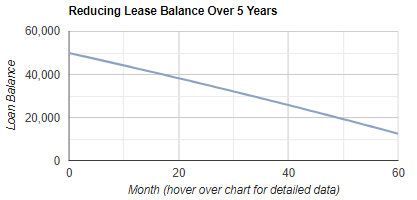
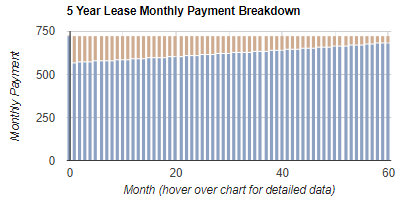
The following amortisation graphs detail month-by-month data on the progress of the proposed loan. The first chart below examines the reducing loan balance over the course of the finance contract term. The second graph illustrates the portion of each monthly repayment allocated to payment of interest vs principal reduction.
How to use our Plant & Equipment Lease Calculator
Our Plant & Equipment Lease Calculator helps business owners estimate lease repayments before you speak with a lender. It’s important because changing the residual (balloon), term and interest rate can materially affect cash flow, total interest paid and the end-of-term payout amount. The calculator provides estimates only and is general information, not personal advice; consider your objectives, financial situation and needs, and check the lease contract, fees and tax treatment with your accountant or adviser.
How to complete the calculator (best-practice order):
1. Purchase Price: Enter the total amount you want to finance, using whole numbers only (no dots or commas). Include relevant on-road and acquisition costs you intend to finance, such as applicable tax, stamp duty, registration, insurance or other costs.
2. Balloon or Residual Value: Choose the residual as a percentage of the purchase price. A higher residual usually lowers the ongoing repayments, but increases the amount due at the end and can increase the overall cost across the term. Select a residual that matches your expected end-of-term plan (refinance, trade-in, or pay out).
3. Term of Loan: Select the number of years. Longer terms typically reduce repayments but can increase total interest paid. Use a term that aligns with the asset’s useful life and how long you expect to keep it.
4. Interest Rate: Select a rate to simulate. The displayed range is indicative only; your actual rate depends on the lender and your circumstances and can only be confirmed after you apply.
5. Calculate: Run the estimate, then re-run scenarios to compare different residuals, terms and rates for a clearer view of affordability versus total cost.
How to interpret the results:
1. Repayment estimate: Treat this as a guide for budgeting, not a quote.
2. Residual due: Note the end-of-term balloon amount you’ll need to pay or refinance.
3. Amortisation graphs: Review how the balance reduces over time and how each repayment splits between interest and principal, which helps you understand cost versus payoff progress.
Personal guarantees, collateral and security interests can affect both a business and the people behind it. This guide explains key risk concepts Australian SME owners, sole traders and company directors should understand before signing a business loan agreement. - read more
Starting or growing a business often requires capital for equipment, stock, staffing, premises or day-to-day cash flow. Business loans can help fund those needs, but the details in the loan agreement determine how the finance works, what it may cost and what obligations the borrower accepts. - read more
Mezzanine finance is a hybrid form of business funding that sits between senior debt and equity. For Australian businesses considering acquisitions, it can help bridge a funding gap when conventional lending is not enough and owners want to limit immediate equity dilution. - read more
Equipment leasing can help Australian businesses access vehicles, machinery, technology or other essential assets without paying the full purchase price upfront. This guide explains how leasing works, how it may affect cash flow and budgeting, and what to consider before choosing a lease arrangement. - read more
Cash flow is the movement of money into and out of a business. Working capital is the short-term funding available after current liabilities are considered. Together, they help a business meet day-to-day obligations, manage timing gaps and plan for growth opportunities. - read more
Secured and unsecured business loans work differently, especially when it comes to collateral, interest rates, borrowing limits, documentation and repayment terms. Understanding these differences can help Australian business owners compare funding options more clearly before making an enquiry or application. - read more
Embarking on a business endeavor often requires substantial financial support, and securing a business loan can be a crucial step towards progress and expansion. A well-prepared loan application not only showcases your business in its best light but also significantly enhances the prospects of obtaining the needed funds. Attention to detail and a thorough understanding of the lending process can streamline your journey to approval. - read more
Latest Australian business survey reporting is sending a practical message to owners and finance managers: trading conditions may be holding up in parts of the economy, but confidence remains fragile. For SMEs, that mix matters. When revenue is uneven, input costs are sticky and customers are cautious, the timing and structure of new borrowing can become just as important as the headline interest rate. - read more
A tax change now working through Australian business finances deserves close attention from owners, directors and finance managers. Since 1 July 2025, the ATO’s general interest charge and shortfall interest charge have no longer been tax-deductible. For businesses carrying overdue tax or correcting underpaid obligations, that can lift the effective after-tax cost of falling behind. - read more
Australia’s move towards Payday Super is more than a compliance update for employers. For many small and medium-sized businesses, it changes the rhythm of payroll-related cash outflows and places a sharper focus on whether day-to-day liquidity is strong enough to meet obligations as they fall due. - read more
Latest market reporting around specialist SME lender Judo Bank points to a business credit market that is not shutting down, but is becoming more deliberate. The lender’s continued focus on relationship-led lending, deposits and small to medium-sized business borrowers suggests demand for finance remains present among firms with clear plans and serviceable cash flow. - read more
Fresh small business indicators are again pointing to a familiar challenge for Australian SMEs: trading activity may continue, but the timing of cash receipts is still creating pressure. Recent industry commentary has highlighted uneven payment behaviour, cautious customer spending and a more deliberate approach to investment among smaller firms. For owners and finance managers, that combination can make working capital planning just as important as sales growth. - read more
Late invoice payments are again emerging as a practical funding issue for Australian small and medium-sized businesses, with fresh industry commentary pointing to continued pressure across trade payments, cash reserves and day-to-day operating liquidity. For business owners, the message is clear: revenue on paper is not the same as cash in the bank. - read more
Fresh business risk signals are reinforcing a clear message for Australian SMEs: access to credit is still available, but lenders are likely to keep asking harder questions about cash flow, repayment capacity and the resilience of each borrower’s operating model. The latest commentary around business failures, trade payment pressure and sector-specific insolvency risk points to a market where credit decisions are becoming increasingly evidence-led. - read more
All finance quotes are provided free (via our secure server) and without
obligation. We respect your
privacy.
Knowledgebase
Interest Rate: A rate which is charged or paid for the use of money. An interest rate is often expressed as an annual percentage of the principal. It is calculated by dividing the amount of interest by the amount of principal. Interest rates often change as a resul