The information on this website is general in nature and does not take into account your objectives, financial situation, or needs. Consider seeking personal advice from a licensed adviser before acting on any information.
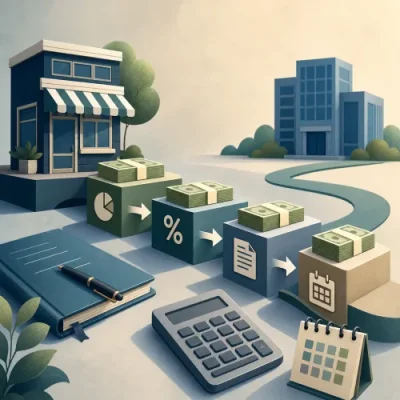
Business loan repayments are shaped by the amount borrowed, interest rate, loan term, repayment frequency, fees and repayment structure. Understanding how these factors interact can help Australian business owners estimate affordability and compare loan options more confidently.
Introduction to business loan repayments
Business loan repayments are the regular payments a business makes to repay borrowed funds over an agreed period. Depending on the loan product, repayments may include principal, interest and, in some cases, fees or other charges.
For Australian businesses, understanding how business loan repayments are calculated is an important part of assessing affordability. A repayment that looks manageable in isolation may affect cash flow differently once seasonal income, supplier payments, wages, tax obligations and other business expenses are taken into account.
This article explains the main factors that influence repayment amounts, including principal and interest, loan term, repayment frequency, fixed and variable rates, interest-only periods, balloon payments, flexible repayment features and the effect of early or missed repayments. It provides general information only and does not take into account your business objectives, financial situation or needs.
If you are still comparing finance types, you can review broader business loan options in Australia before estimating repayment scenarios.
What makes up a business loan repayment?
A standard business loan repayment usually has two main components:
- Principal: the amount borrowed that is being repaid over time.
- Interest: the lender's charge for providing the funds, usually calculated by applying an interest rate to the outstanding balance.
Some repayments may also incorporate fees, depending on the lender and the product. Other fees may be charged separately, such as establishment fees, monthly account fees, early repayment fees or late payment fees. Whether these costs are built into repayments or charged separately can affect how easy it is to compare loans.
Business loan repayments are generally calculated using the loan amount, interest rate, term and repayment frequency. The lender's method of calculating interest, the timing of repayments and any applicable fees can also influence the final repayment amount.
How business loan repayments are calculated
For many principal and interest business loans, repayments are calculated so that the loan is progressively paid down over the loan term. This process is often called amortisation. In the early stages, a larger portion of each repayment may go towards interest because the outstanding balance is higher. As the balance reduces, more of each repayment generally goes towards principal.
The exact calculation method can vary between lenders and loan products, but the main inputs are usually:
- Loan amount: a larger loan balance generally means higher repayments, all else being equal.
- Interest rate: a higher rate usually increases the interest component of each repayment.
- Loan term: a longer term can reduce regular repayment amounts but may increase total interest paid over the life of the loan.
- Repayment frequency: weekly, fortnightly, monthly or other schedules can change the timing of interest and principal reductions.
- Fees and charges: some costs may increase the total amount payable or affect the effective cost of borrowing.
- Repayment type: principal and interest, interest-only, balloon payments and flexible structures work differently.
A business loan repayment calculator can help estimate repayment scenarios by adjusting these variables. Calculators provide estimates only, and actual repayments depend on lender criteria, the approved loan structure and the final loan agreement.
Principal and interest repayments
Principal and interest repayments are common for term business loans. Each repayment contributes to both the interest charged and the amount borrowed. If repayments are made as scheduled, the loan balance should reduce over time until the loan is repaid at the end of the term.
This structure may suit businesses that want a clear repayment pathway and are comfortable committing to regular repayments. It can also make it easier to see how the debt will reduce over time.
However, principal and interest repayments are generally higher than interest-only repayments during the same period because the business is paying down the debt as well as covering interest. Before applying, it is important to test whether the repayment fits within realistic cash flow forecasts rather than relying only on current turnover.
Interest-only periods
Some business loans may offer an interest-only period, where repayments cover interest but do not reduce the principal during that period. Availability depends on the lender, loan type and business circumstances.
Interest-only repayments may reduce the regular payment amount for a period, which can help some businesses manage cash flow while investing in growth, purchasing stock or waiting for revenue from a project. However, the original principal remains outstanding unless additional repayments are made.
When the interest-only period ends, repayments may increase because the remaining principal must be repaid over the rest of the loan term. This can create a cash flow shock if the business has not planned for the higher repayment amount.
When considering an interest-only structure, ask how repayments will change at the end of the period, whether the total interest cost may be higher and whether there are conditions attached to the feature.
Loan term and repayment frequency
The loan term is one of the biggest influences on repayment amounts. A shorter term usually means higher regular repayments because the principal is repaid over a shorter period. A longer term may reduce regular repayment amounts, but the business may pay interest for longer.
Repayment frequency also matters. Some loans require monthly repayments, while others may allow weekly or fortnightly repayments. More frequent repayments can sometimes help align repayments with business cash inflows, such as weekly sales revenue. However, the total cost impact depends on the lender's interest calculation method and the loan terms.
| Repayment factor |
Possible effect on repayments |
Cash flow consideration |
| Shorter loan term |
Higher regular repayments, potentially less time paying interest |
Requires stronger short-term cash flow |
| Longer loan term |
Lower regular repayments, potentially more interest over time |
May ease monthly pressure but extends the debt commitment |
| Weekly or fortnightly repayments |
Smaller, more frequent payments |
May suit businesses with frequent revenue |
| Monthly repayments |
Larger, less frequent payments |
May suit businesses with monthly billing cycles |
Fixed, variable and flexible repayment options
Business loan products may offer different repayment structures, including fixed, variable and flexible options. Each option has different features, costs and conditions that may affect the total cost of borrowing and the way repayments are made.
Fixed repayment options
Fixed repayment options involve loans where the interest rate remains constant for an agreed period or, in some cases, for the whole term. This means repayment amounts are generally predictable during the fixed-rate period, which may assist with budgeting and forecasting.
One feature of fixed-rate loans is repayment certainty. A business can plan around a known repayment amount, which may be useful where margins are tight or cash flow is carefully budgeted.
Fixed-rate loans may have different fees, restrictions or features compared with variable-rate loans. For example, some fixed-rate products may limit additional repayments or charge break costs if the loan is repaid early. The availability of fixed-rate products and their terms will vary between lenders.
Variable repayment options
Variable repayment options are loans where the interest rate can change over the loan term. If the interest rate changes, repayment amounts may also change, depending on the lender and product structure.
Variable rates may move for several reasons, including changes in market conditions, lender funding costs or the lender's pricing decisions. A decrease in the rate may reduce repayments or interest costs, while an increase may raise repayments and place additional pressure on cash flow.
Variable-rate loans may also offer features that are not available on all fixed-rate products, such as additional repayments or redraw-style access where offered. These features vary between lenders and should be checked carefully in the loan terms.
Flexible repayment options
Flexible repayment options may allow borrowers to adjust repayment arrangements within the limits of the loan agreement. Depending on the lender and product, flexible features may include additional repayments, repayment frequency options, redraw-style access to extra repayments, payment holidays or seasonal repayment structures.
These features can be useful for businesses with uneven revenue, such as seasonal operators or project-based businesses. For example, a business may want to make extra repayments during stronger trading periods or align repayments with customer receipts.
However, flexibility can come with conditions. Fees, limits, notice requirements or eligibility rules may apply. Some features may also be available only if the account is up to date. Businesses should review the loan agreement to understand how the feature works before relying on it.
Balloon payments and residual amounts
Some business finance arrangements may include a balloon payment or residual amount at the end of the term. This means the regular repayments are calculated on the basis that a larger final payment remains due at the end.
A balloon payment can reduce regular repayment amounts during the loan term, but it does not remove the obligation to pay the remaining amount. The business needs a plan for how the final payment will be handled, such as paying it from cash reserves, selling or refinancing an asset, or arranging further finance if available.
Balloon or residual structures are commonly associated with some vehicle and equipment finance arrangements, but availability and terms vary. They should be assessed carefully because a lower regular repayment may come with a significant end-of-term obligation.
How fees affect repayment amounts and total cost
Interest is only one part of the cost of borrowing. Business loan fees can affect the amount a business pays over time and may make two loans with similar interest rates quite different in practice.
Fees may include application or establishment fees, ongoing account fees, valuation fees, settlement fees, early repayment fees, late payment fees or other charges depending on the product. Some fees are paid upfront, some are charged periodically and some may be added to the loan balance.
If a fee is added to the loan balance, interest may be charged on that amount as part of the loan. If a fee is paid separately, it may not change the repayment amount but still increases the total cost of obtaining finance.
When comparing repayment estimates, it can be helpful to read more about business loan fees and the total cost of borrowing, as the repayment amount alone may not show the full cost.
Early repayments, redraw and offset-style features
Some business loans allow additional repayments, which can reduce the outstanding balance faster and may reduce interest charged over time. The effect depends on the loan structure, rate type and lender terms.
Other products may include redraw-style access, where extra repayments can potentially be withdrawn later, subject to conditions. This may provide flexibility if the business wants to reduce interest while maintaining access to funds. However, redraw availability is not guaranteed across all products and may be limited by the lender's rules.
Offset-style features are less common in some business lending structures than in home lending, but certain commercial finance products may offer facilities that reduce interest by linking funds or balances in a particular way. The availability, operation and cost of these features vary significantly.
Before making extra repayments, ask whether fees apply, whether the funds can be redrawn, whether redraw can be suspended and whether early repayment changes the loan term or only reduces the balance.
What happens if repayments are missed?
Missing a business loan repayment can have financial and operational consequences. Depending on the lender and loan agreement, missed repayments may lead to late payment fees, default interest, collection activity, restrictions on further access to credit or reporting consequences.
If the loan is secured, ongoing default may also create risks for the secured asset. If a director's guarantee or personal guarantee has been provided, there may be personal financial implications. The specific consequences depend on the loan agreement, security arrangements and lender processes.
If your business is likely to miss a repayment, it is generally better to contact the lender early rather than waiting until the account is overdue. Some lenders may discuss options, but outcomes depend on the lender's hardship or arrears processes, the business's circumstances and the loan terms.
Using repayment estimates in cash flow planning
A repayment estimate is most useful when it is tested against a realistic cash flow forecast. Business owners should consider not only whether the repayment is affordable today, but whether it remains manageable if revenue falls, costs increase or interest rates change.
Questions to consider include:
- Will repayments align with customer payment cycles and seasonal revenue?
- Can the business meet repayments after wages, rent, tax, supplier payments and other commitments?
- What happens if interest rates increase on a variable-rate loan?
- Is there a cash buffer for slower trading periods or unexpected expenses?
- Will the loan fund an activity that is expected to generate enough return to support repayments?
- Are there end-of-term obligations, such as a balloon payment?
For a broader cash flow perspective, you may also find it useful to review guidance on managing cash flow and working capital.
Comparing repayment options before applying
When comparing business loan repayments, avoid looking only at the lowest regular repayment amount. A lower repayment may be the result of a longer term, interest-only period, balloon payment or fees being charged separately. These features may be appropriate in some circumstances, but they should be understood before a decision is made.
It may help to compare several scenarios side by side:
- shorter versus longer loan terms;
- fixed versus variable rates;
- principal and interest versus interest-only periods;
- monthly versus weekly or fortnightly repayment schedules;
- with and without balloon payments;
- with and without upfront or ongoing fees included.
If you are unsure how to interpret a lender's repayment structure or loan conditions, you may wish to speak with the lender, your accountant, a suitably qualified adviser or a commercial finance broker. You can also use the broker directory to explore support options for comparing loan structures and preparing questions for lenders.
Conclusion
Business loan repayments are affected by more than the headline interest rate. The amount borrowed, loan term, repayment frequency, rate type, fees, interest-only periods, balloon payments, flexible features and borrower behaviour can all influence repayment amounts and total borrowing cost.
Understanding these factors can help Australian business owners compare loan options more effectively and assess the likely cash flow impact before applying. Calculators can provide useful estimates, but the final repayment amount will depend on the lender, approved loan structure, fees, eligibility criteria and the terms of the loan agreement.
Before entering into a business loan, review the repayment schedule, fees, early repayment conditions, default consequences and any flexible features. If the loan has a material impact on your business cash flow or risk position, consider seeking professional advice that takes your circumstances into account.
Published: Wednesday, 8th Jul 2026
Author: Paige Estritori


Flexible repayment options sound handy, but I’d want the fees spelt out clearly before relying on them for lumpy cash flow.